
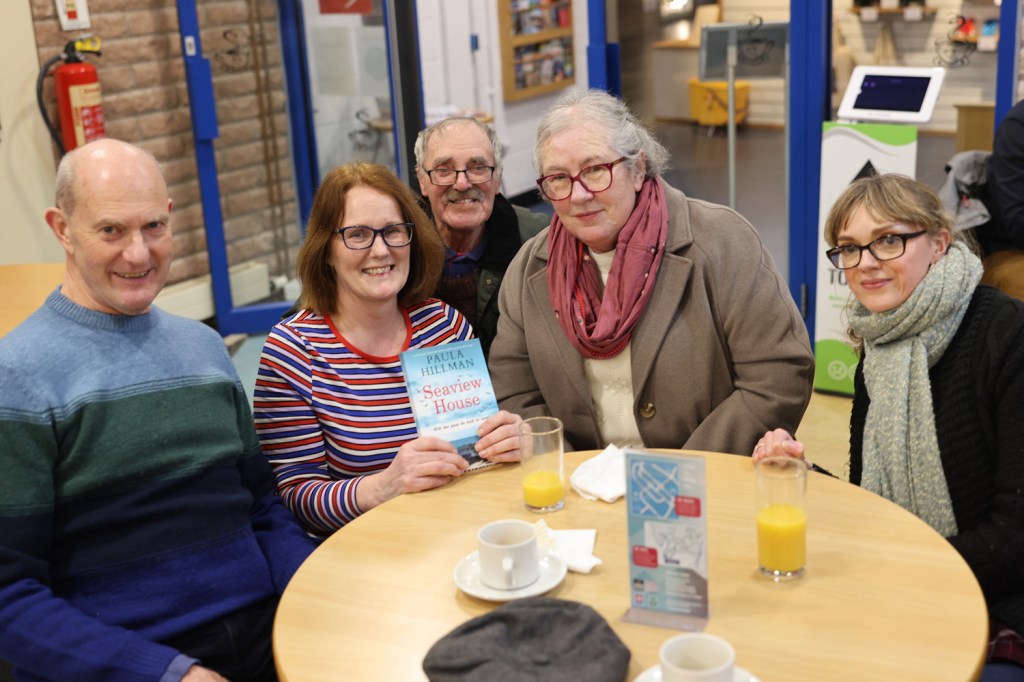
When I first walked away from my teaching career, I found it difficult to come down from the frantic pace of ten hour days with hardly a toilet break. Huge chunks of time piled themselves up in my life and I couldn’t deal with them, so I sat at my computer and wrote. My first 90k words were what I deemed to be a memoir. They were really a record of the thirty-six years I’d been in education. It was pretty raw writing, as I realise when I look back. I’ve edited and shared a chapter called Stevie already; this is another, about my last hours in a school I’ve never been back to.
Last days, November 2019
‘Can we talk about Cassie?’
A parent peers around my classroom door.
‘Course,’ I say, though I’m feeling distinctly odd. Anxiety does that. Cortisol overload, and I’ve had it for days now. ‘Come in.’
She walks in, gait slightly lop-sided. She is dealing with a neurological condition, as well as four kids under ten with two different fathers. Neither of which has stayed with her. Cassie follows, vibrant auburn hair tucked neatly behind her ears.
‘She’s come out of school saying she’s quit violins. Should have been at practice tonight.’ Mother turns to daughter. ‘Shouldn’t you.’
Cassie’s younger brother is standing in the doorway. He is casting around the room. Looking for entertainment, I suspect. He has the same red hair as his sister, but not her expression of feisty defiance.
‘Hello, Callum,’ I say. ‘Have you come to have a look around the big kids’ classroom?’
He marches in, brash despite the remains of today’s school lunch caked on the front of his sweatshirt. Who cares, when you’re seven?
‘Yeah,’ he drawls, spying the model cat-mummies my class have made. They are truly hideous, with great lumps of Modroc hanging off them and staring googly eyes. He stares back. Cassie folds her arms and lets out a dramatic sigh.
‘I’ve got too much on to do violins,’ she huffs. ‘I want to be in your Christmas show.’
‘Don’t be so cheeky, madam,’ mum snaps. ‘The adults decide what you’re doing, not you.’
Cassie is not the sort of child who challenges adults. She saves that for her peers, so I am surprised at her behaviour. But I am finding it difficult to care one way or another.
I’m drowning here, I want to say, give me a break.
Throughout the day, I’ve been shadowed by a support teacher. One of those who doesn’t run a class but is used to cover others. I recruited her a couple of years earlier and we’re both embarrassed by the position we find ourselves in. She’s what I would describe as an outdoorsy type, with permanently tanned skin and an inner glow from vegan food and wholesome thoughts. Her ideas for inspiring kids are pin-sharp. She obviously thought it was safe enough to leave me on my own at this point, as I’ve made it through the day. The truth is, I already know I won’t be coming back to school again.
‘It’s Cassie’s last chance to be in one of my shows,’ I say to mum. ‘And I’ve cast her in the lead role.’ I hear Cassie yelp. ‘She doesn’t know that yet.’
‘I do now.’
‘So,’ I continue, ‘how about I ask the violin teacher if she can put Cassie’s lessons on hold until after Christmas? I’ll ask her for some homework type practice and see if she’ll keep the place open.’
Mum thinks about this for a moment.
‘You’ll have to keep practicing,’ she tells Cassie. ‘Or we’ll all be on to you.’
‘I will.’
In Cassie’s eyes there is such gratitude, I could cry. I already know I won’t be producing the Christmas show I have written and cast. I know I won’t see Cassie through her last year, her SATs and her transition to secondary school. I can’t do this anymore: I can no longer be a teacher.
Cassie’s mum is still scolding. ‘You better bloody had keep practicing, lady.’ She turns to me. ‘What do you say to Mrs. Hillman?’
‘Thanks, Miss.’ Cassie beams. She’s back to her eleven-year-old self. The devil-child has gone. Callum is gathered up by his sister, and the family take themselves off. I do cry then. It’s a strange, numb sort of crying. Hot tears escape from my eyes but there’s no sound. I can only think of getting to the safety of my home. Ridiculous really, when you’re a fifty-five-year-old mother of two, wife, daughter, sister, aunt, teacher with over thirty years of experience. What I feel like is a crumbling, frightened mess.
Many times over the years when there have been difficulties in my work or personal life, I have been able to function in the classroom. I have been able to deliver good lessons and convince myself and my colleagues that everything is fine. We all do it. It’s a way of coping until normality is resumed. I can’t do it today. I look at the pile of exercise books on my desk, and at the sink full of washing-up, and at the untidy stack of games and Lego in the corner, and I don’t respond. I’m expecting a visit from my boss. I’m not sure if I want to see her. Throughout the weekend, we have talked. She came to see me at my house. We both know I’m having some sort of mental crisis. She’s surprised; I’m not. For the last ten years I have supported her through her taking the reins of our school from the old headteacher, and I’ve done that with unwavering application. She made me deputy-head because of it. But the weight of being that support has finally crushed me. When I walked down the corridor earlier in the day, I was ignored by three junior members of staff. They all know me. I recruited most of them. Unfortunately, the culture has become one of inclusivity for the children and dog-eat-dog for the staff. And I am not in the gang.
I hear the click-clack of the head-teacher’s high-heels in the corridor. I pull out a wad of tissue from the box on my desk and pat my eyes dry. My cheeks sting.
‘Hi,’ she says as she walks in. ‘How’s it been?’
Like I’m some failing probationary teacher, like I haven’t just saved her from two years of having to deal with the way a kid like Stevie can bring down a school.
‘Fine.’ I make a show of cleaning my small white-board, knowing that the spray solvent will be a distraction. I don’t want to look at her face. It will have that sympathetic smile. I’m not sure if she realises she’s about to lose her best asset.
‘What’s Rhys been like?’ she asks, head tilted.
Apart from picking up a handful of Lego and throwing it in my face, fine.
From the beginning of this term, after two years of working with Stevie, and a year with an autistic boy who needed everything done individually for him, right down to the smallest of tasks being differentiated, she’d placed me, full-time, with another class containing a boy that had seen off every teacher he’d had. There was nothing left in my tank, experienced or not, deputy-head or not. And that was part of the problem. The role of a deputy head was one of perfect teaching, perfect managing and no colleagues who were your peers.
‘Rhys has been okay,’ I lied. It wouldn’t matter in another half-hour, anyway. ‘And Liz has helped with him, anyway.’
I can’t tell her that Liz has been useless with Rhys, or that we’ve both struggled with him. Tomorrow, Liz will be on her own. And I find I don’t care. We both turn at the sound of more heels in the corridor.
‘Phone for you, Mrs Taylor.’ One of the school secretaires puts her head around the door. I’m not acknowledged. I don’t get admin done. I’m not in the gang.
‘See you in a bit,’ says my boss, and I listen to the retreating heels, until I’m sure it’s safe. Anxiety is building in my stomach now. It turns my thighs to jelly, and I get a thick feeling behind my eyes so that I can’t focus on anything other than getting out of this building and away. I take my anorak from a peg on the back of my stockroom door, then swing my handbag over my shoulder and pick up my tote bags. If I can sneak out of the side door and into the carpark, no one will notice I have even gone.
I exit the building and step into an evening of cold air tinged with the smell of sulphur. Cassie, her brother, and her mum are just across the road, heads down and hurrying home. As I click open my car door, a back-yard firework explodes in the sky. I know, with absolute clarity, this is the end of my teaching career.


 Paula Hillman, author
Leave a comment