
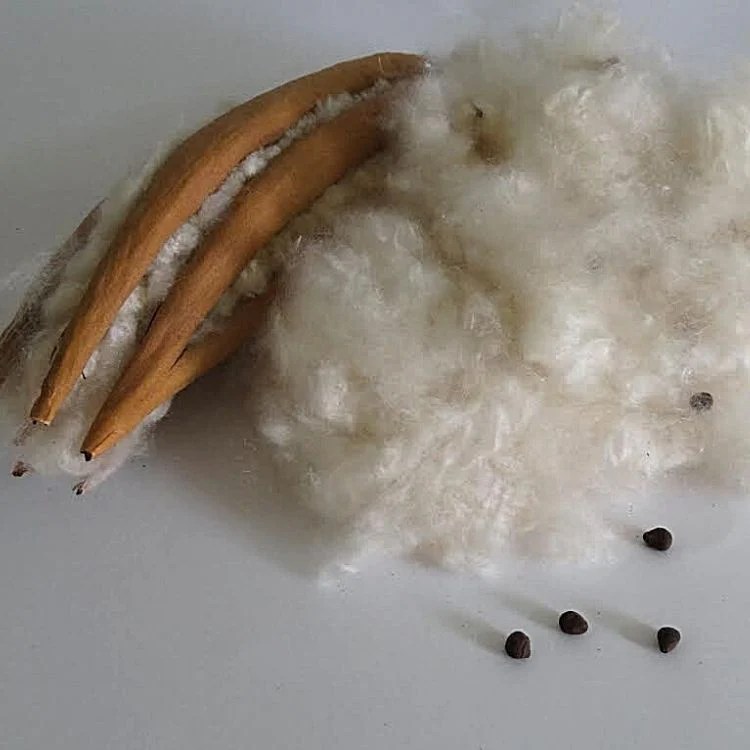
Here’s another extract from the memoir I’m working on. Preparing a float for Barrow carnival is one of my earliest teaching memories. I’ve never looked at Kapok in the same way since then! Names have been changed, obviously!
Kapok
Summer 1988
Kapok floats through the slants of afternoon sunshine and settles on the playground floor. I clear my throat. Are the children who have helped with the wigs coughing, too? Most of them are out front, putting the last paper flowers around the carnival float. Only Annie sits with me, eyes adoring, fingers gummed up with PVA glue. She’s not a million miles away from me in age – thirteen years to be exact. Nine months ago I’d ditched my own childish flared jeans and Greenpeace t-shirts for sensible skirts and a neatly bobbed haircut.
‘Last one, Miss,’ she says, holding up the white-fluffed head-piece with the Marie-Antoinette ringlets. ‘It’s for James. Large size to match his big head.’
We have a giggle at this. She and James have a love-hate relationship: he loves her; she hates boys. She’s twice his height, with white-blonde hair from swimming; quite an Amazon is our Annie. I’ve taken a yard brush and dustpan from the caretaker’s cupboard. I hold the pan while she sweeps. Neither of us are dressed for the carnival parade: I’m in my Saturday clothes and Annie has on her navy-blue school shorts, a t-shirt and a hand-knitted cardi in the palest shade of turquoise, with heart-shaped buttons. Between us hangs an unspoken agreement: we will prolong the clearing up so as to avoid what is happening on the main road at the front of the school.
‘Nearly ready, you two?’ The double doors burst open and a vision in navy-and-white stripes appears. Clive Simpson. Head-teacher and French-onion seller. Atop his sandy hair is a white felt beret, a red paisley neckerchief completing the outfit. His string of plastic onions and borrowed accordion have been lurking around the front office for the past week. Annie and I stand to attention.
‘Last one complete, ta-da.’ Annie holds up the final wig. ‘Do you like it, Sir?’
Clive inhales loudly and tilts his hip towards her. ‘That is fabulous.’ He winks at me. ‘Isn’t it, Miss?’
I look over my shoulder, then realise he means me. I slide an arm around Annie. ‘It’s perfect. So let’s go and find James and try it on for size. He must be here by now.’ I nod towards the front of the school. ‘We can finish cleaning up once the float’s gone.’
Clive holds the door for us, humming Alouette, which he’s been teaching to the whole school this week as a change from Kum ba ya. Accompanying him on my guitar has been one of the most nerve-shredding experiences of my life to date. Performing in front of four-hundred children and teachers was bad enough, but his impromptu song-actions almost tipped me over the edge. His audience adored him, however.
The school corridors, eerily deserted on this Saturday morning, have that recognisable odour, a mix of disinfectant and gym shoes. Through double doors in the reception area, I can see the huge flat-backed lorry which is our carnival float. Every aspect of it is crepe-paper tricolore. There are streamers, trefoils, flags, flowers and sitting amongst them all is Madame Defarge herself, holding her giant knitting needles and seated by a guillotine and a basket of papier-mâché heads. They look more realistic than I’d thought when I’d sloshed red paint around their ragged necklines last week.
I step into the heat-soaked afternoon with Annie on my heels. Clive strides ahead of us, calling up and down the street in his booming headteacher voice. James is there, in his dark-blue velvet breeches and box-jacket. He grins and steps towards us.
‘Soz about being late,’ he says smoothly. ‘Mam lost my stockings and had to get me another pair from nana’s.’ He plucks at the fabric wrinkled around his calves. ‘This was the only colour she had.’
‘That’ll be American Tan,’ says Annie with a flounce. The colour she wears and hates at dancing class. She’s chosen not to walk with her troupe today. James stands stiff and straight while she forces the newly-made wig onto his head, then tucks his dark fringe under the cardboard band at the front. ‘You’d better get on now.’ She tilts her head towards the float. ‘Mr Simpson wants to get going.’
Clive is already onboard, settling Les Miserables, and the small courtiers in their velvet and jewels. I catch the eye of another colleague, and she blows me a kiss. She pulls a small boy onto her knee and smooths down his lacey neck ruffle. Annie coughs as a cloud of exhaust fumes spew from the back of the lorry, then it pulls out into the road and chugs up the hill. I feel sad, suddenly, that I didn’t have the guts to dress up and ride around the town centre with my comrades. The street empties. Parents drift towards home, carry the remnants of their children’s clothing.
Back inside, Annie chatters away about how strange school feels without any kids or teachers and how she doesn’t want to leave at the end of the term.
‘School’s been like a family to me,’ she says. ‘I didn’t like Parkview when we visited. It stunk, for one thing. Of cabbage. And the teachers wouldn’t even look at us. There are kids from Yarlside there, too. Dead snobby. Me and Shelly remembered one of them from netball. She kept elbowing us and their ref didn’t even say anything. Miss? Shall we go and sweep the back yard?’
But I am staring through the open door of Clive’s office. Draped across the back of his chair is a string of plastic onions. His accordion is beside them, on the floor.
‘Oh, hell,’ I whisper. Annie comes to stand beside me.
‘That’s not good.’ She shakes her head. ‘He’s been practicing them songs for months.’
I can’t think what to do. The obvious thing would be to pick up the items and chase the float until we catch it. Or make our way to the parade starting point, where the lorries assemble, and do the handover there. But there’s a problem, and not a small one. ‘He’ll have to do his ‘one-two-three-sing’ routine. It won’t matter.’
‘Oh, Miss.’ Annie ventures into the room and picks up the onions. ‘We can’t leave him without these. Or that thing.’ She nods towards the accordion. ‘Whatever it’s called.’
I absolutely agree with her. We should make our way into the town centre and find the school float. But I can’t. And there are a thousand excuses zooming around in my brain, vying for position as the best one to give Annie.
‘It’s too late now,’ I venture. ‘And he’s probably forgotten all about them anyway. You get yourself off home, and I’ll see you Monday.’
‘Oh, come on, Miss. Mam didn’t give me a time to be in. She said I can go up to the park and watch the end of the parade and the dancing. Let’s go and stand on Rawlinson Street. James will sulk if I don’t throw a few pennies at him. I’ll sulk if I don’t throw a few pennies at him.’
I want to say yes, want to take the time to walk with Annie on this beautiful summer’s afternoon, when the town is positively dripping with community spirit. And in the end, I do.
We pick up Clive’s props. Annie insists on carrying the accordion with the strap slanted across her body so that she looks like she’s about to break into song, and I join her by winding the onion string around my shoulders. My heart is hammering against my ribs and I’m getting that familiar out-of-body experience. I lock the front doors of the school with the huge mortice key and watch Annie sauntering across the carpark. My brain goes into blank mode and I can’t think of the nearest place the carnival procession comes to. All I can do is follow.
Once we’re across the main road, we hit the narrow pavements of the old town centre. They are lined with small shop fronts and tiny terraced houses, and most are decorated with bunting and streamers and flags. The further we go, the more groups of people are gathering, and in the distance, I can see the police cordon for the carnival proper. But it feels too far away from school and panic is knifing through me so much that I can’t speak. Annie chats about the big decisions she’s been having to make: dancing class or swimming; stay best friends with Shelly or try to include Zoe. I can only nod.
‘Are you alright, Miss?’ she asks eventually. ‘You look a bit…sickly.’
The first floods of adrenaline are receding now, and I’m left with a raw feeling and jelly-like thigh muscles. I smile but Annie’s attention has wandered. She’s strides away, calling over her shoulder that she can see our float and we should hurry.
The crowds are having a great time. They are packed, shoulder-to-shoulder and hurling money into the buckets being proffered by various characters balanced on the backs of passing floats. There are cave-men and dinosaurs, puritans and witches, and the canned music pulses through my ears and down to the ground like bursts of electricity. I don’t want to pass-out. Not when I’m in charge of an eleven-year-old school-girl.
‘There’s Sir,’ she suddenly shouts.
Our lorry is pulling round the corner. The driver has his cab window open and his elbow resting on the sill. With his other hand he is performing a miracle. The vehicle somehow swings onto the road in front of us without damaging any of the tightly-packed crowd. They, however, perform no such miracles. They throw themselves forward and hurl loose change at our float. Some of the children have taken off their wigs and are joyfully trying to catch the money with them. My colleagues sit in nattering groups and Clive stands amongst it all with a smile as wide as the Siene itself. Annie screeches and waves so that its impossible not to see her. I cast about for an escape route, as I always do, and the crowds close in. Then the unthinkable happens. Annie makes it to the edge of the pavement and Clive reaches out to her. While I watch in horror, she is hauled up onto the float, her tiny shorts riding up over her backside and her midriff on show for all to see. But she is laughing. It’s wild and joyful and it takes me out of myself for a moment. Then she is calling to me.
‘Miss. Miss Hillman. You come on board as well.’ She’s freed herself from the accordion, and she is standing with Clive, holding out her arms. My breath is coming out in small pants now, and my face is numb. I could be trapped in the smallest pothole, deep underground, with water rising around me and no hope of rescue.
‘Hold out your hands, Mrs Hillman,’ I hear Clive saying. ‘Eyes on me, now. Do exactly as I say.’ His calm tone cuts through my panic. Somehow, he has read the situation and is taking charge. ‘Give me the onions first.’
I’m not sure how I make it onto the float, but the relief of being there with people I know causes a break in the flow of fear-talk I have been giving myself. Annie hugs my waist.
‘We didn’t want to go on the float but now we’re on it,’ she laughs. ‘I might as well wear one of them crappy wigs. Want one?’
I don’t. What I want is to sit down in the corner and sob away my ridiculous fear of crowds.
‘No thanks.’ I attempt a laugh. ‘I never want to set eyes on those horrible things again.’
Clive is standing beside me. He sends Annie away with a flap of his hand and a nod towards James, who is sitting by himself and waving regally.
‘Let Miss get her breath back,‘ he says as he picks up the accordion and slings it over his shoulder. ‘I’ve a flask with some tea in it, Mrs Hillman, if you’d like some. I would. My throat’s dry from all the shouting. It’s just in the cool bag by Mrs Mac’s feet. Pour me one as well, could you? It’ll lubricate the singing. Thanks for bringing this, by the way.’ He squeezes a high-pitched note from the accordion. ‘Ready, everyone.’


 Paula Hillman, author
Leave a comment