
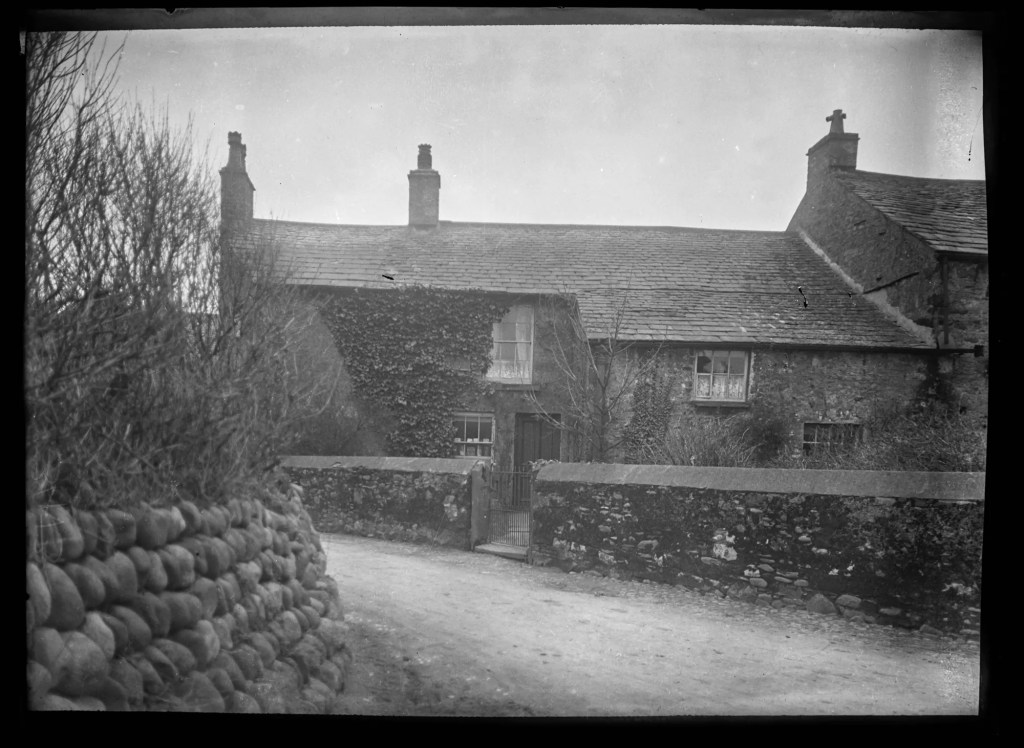
(Photo of Biggar Village courtesy of The Sankey Archive)
I’ve had a read through my attempt at writing a historical novel set in Barrow. I based it on the farm at the bottom of Ormsgill Lane, reinventing it as Darkwater Farm. It was about twin brothers, William and Gabriel Ward, who buy the farm during the Industrial Revolution, and settle there with Alice, William’s wife. Intrigue happens when Alice has an affair with the other twin! My publisher hated it, so it morphed into Halfmoon Lane (if you’ve read it, you’ll get the twin connection). Looking back, I can’t understand what happened with my publisher…ex-publisher. They rejected three manuscripts for differing reasons, none of which made sense. Anyhow, those three novels are still to be published, and most days, readers or family will ask me if I’ve any new books out or have stopped writing. The answer is no to both questions. I wish I could give them better news. The more I delve into the publishing industry, the more difficult it becomes to get a handle on it. Celebrities secure publishing deals with big publishers without having to try; books are published without due diligence; AI is used in the worst kinds of ways. A struggling writer like me can’t get a sniff. Anyhow, here are the opening paragraphs of Darkwater Farm. My Barrow readers would love it.
Chapter one
Alice
On the breeze, she could smell the end of summer, feel it on her bare forearms, and taste it on the tip of her tongue. A heady mix of crumbled earth, drying hay, brackish water. Alice swung the grain sack over her shoulder and stepped carefully across the stubble of the meadow toward the pond. The swans, sensing her presence, immediately rose up with outstretched wings and arched necks, flapping into the dusk like a pair of dishevelled angels. She set the grain sack down and waited.
A month ago, it had been difficult to leave the farmhouse. Now, here she was, wandering through the cool of the evening, sleeves rolled up and completely alone. From where she stood, she could see the sweep of Darkwater land and the sea beyond. A hazy sun dipped below the horizon, transforming the water from dark blue to gold. These wide and wildly overgrown fields belonged to them, though whether it was blessing or burden, she had yet to figure out.
The swans waddled toward her. With their wings outstretched and necks elongated, they could be intimidating. For a month, Alice had been feeding them and checking on their health. The pair had appeared not long after her arrival, prompting her to search for information, riffling through boxes of books transported from the other place. She had not found much. Instinct told her that leftover grain and peas might be suitable as food, so she scattered them at the edge of the pond. The swans responded gleefully, beaks scraping, bodies tense.
Alice watched them for a while, enjoying the way each swan stepped aside for the other, politely greedy. She recalled reading that they paired up for life, but could not fathom how they recognised a mate who looked exactly like them.
On the far side of the pond, another group of birds drifted, round, dark bodies, and white-tipped heads resembling stars in a pitch-black sky. Coots, she thought they were called. They never ventured near her feeding sack, and if she approached them, they fled, long legs carrying away their small bodies. This evening, they seemed settled and content. She ran her hands around the back of her neck, plucking at strands of hair that had escaped from her careful pinning. Her skin felt gritty from the day’s work and warm from the afternoon heat. She wished for a bath, but the farmhouse had no such luxury.
Something stirred. A shift in the air behind her, muffled footsteps, a light cough. Arms around her waist and a body pressed hard. Will. Alice relaxed, her thoughts lingering on why she had moved to the farm in the first place, their escape from everything he loathed. But as she turned to face him and ask how his day had been, it wasn’t her husband who stared back.
‘Gabe,’ she said, pulling herself away from his embrace. ‘You must stop doing this. It makes me feel uncomfortable.’ Before her stood Gabriel Ward: same height, the same fine dark hair, flaring nostrils, and clean jawline. He was dressed for a day of roaming pastureland and checking fences. Had she seen his clothes, she would have recognised him immediately; Will was an office man, through and through.
‘Can I not embrace my sister-in-law without any meaning being attached to the gesture?’ Gabriel asked.
‘You can. Of course you can.’ Alice looked for a way to escape. ‘Ignore me. I thought I was alone.’
 Paula Hillman, author
Leave a comment